

In today’s fast-paced, digital-first world, youth mental health has reached a critical tipping point. Registered social worker Laurel Brannagan (MSW, RSW, founder of Laurel Brannagan Counselling Services) joined Lana Doan to discuss the rising levels of anxiety, depression, and emotional dysregulation among children and teens, and how parents can better support this “overwhelmed generation.”
From Helicopter to Grass-Cutting Parenting
Laurel highlights a new parenting trend: the “grass cutter” parent. One who removes every obstacle before a child even encounters it. While this approach is intended to offer protection, it robs children of the resilience, self-esteem, and problem-solving skills they need.
“We take away all elements of risk so our children don’t experience discomfort—and that creates anxious children,” Laurel explains.
Key takeaway:
- Allow kids to make small mistakes.
- Discomfort builds confidence.
- Resilience comes from overcoming, not avoiding challenges.
The Social Media Effect: Fast Dopamine, Slow Development
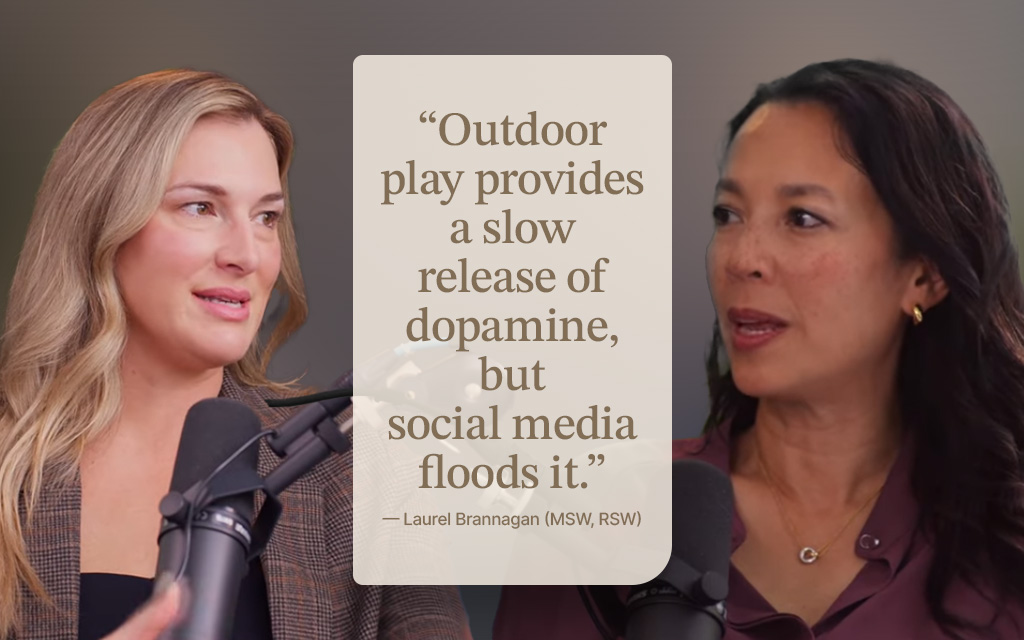
Both Lana and Laurel explore how social media reshapes the developing brain. Endless scrolling creates dopamine surges similar to those from sugar or addictive substances, training kids to seek instant gratification.
How to help:
- Delay social media access until it is age-appropriate.
- Model healthy tech boundaries.
- Prioritize real-world play, connection, and downtime.
Parenting in the Digital Age: Awareness Over Perfection
Balancing full-time jobs, activities, and household pressures often leads to technology becoming the “digital babysitter.” Laurel urges parents to practice compassion and awareness instead of guilt.
“We all use it sometimes—but be aware,” she says. “Structure helps—no devices on school nights, for example.”
Healthy screen-time strategies
- Create family tech rules.
- No phones in bedrooms overnight.
- Encourage outdoor, unstructured play
Emotional Regulation: It Starts With Us
“Model calmness, name emotions, and demonstrate how to repair relationships. When you regulate yourself, they learn to regulate themselves,” she emphasizes.
Try this:
- Name emotions out loud: “I’m frustrated that this broke, but I’ll take a breath.”
- Practice repair after conflict: “I’m sorry I overreacted. I’m still learning, too.”
- Model self-compassion—kids absorb it.
Healing the Parent to Help the Child
One of Laurel’s most powerful messages is that healing begins with the caregiver.
“You can’t push your trauma underwater forever—it will eventually surface,” she explains, using the metaphor of holding a beach ball underwater.
When parents address their own triggers, they break cycles of shame and create emotionally safer homes.
Connection Before Correction
“We don’t have to be perfect,” Laurel adds. “We just have to be present.”
Takeaway
This generation is not broken, they’re overwhelmed. With balanced guidance, emotional modeling, and awareness of technology’s impact, we can raise resilient, connected kids who feel safe to make mistakes, express emotions, and grow through challenges.
Ready to Support Your Child’s Emotional Wellbeing?
If this conversation resonated with you, you’re not alone. Parenting in today’s digital world can feel overwhelming, but support is available. Book a session with Lana Doan, Registered Social Worker, to explore practical tools for emotional regulation, stronger parent–child connections, and a calmer home environment. Together, you can create space for growth, healing, and resilience for both you and your child.