

Our earliest relationships shape our self-perception and how we relate to others, influencing everything from our capacity to love to our parenting styles. In this conversation, counselor Lana Doan sits down with Dana Thompson (BSW, RSW), founder of Dana Thompson Counselling and Family Wellness. Together they explore attachment theory, connected parenting, and how healing past wounds can foster more secure and compassionate family bonds.
Understanding Attachment: The Blueprint for Connection
Attachment theory explains that the emotional bond between a child and their primary caregiver forms the foundation for all future relationships. When a child’s early needs for safety, comfort, and connection are met consistently, they grow into adults who trust easily, regulate emotions effectively, and form healthy relationships. However, if those needs are met inconsistently or with anger, rejection, or absence, insecurity and fear can carry over into adulthood, affecting how we engage as partners, parents, and friends.
The Four Main Attachment Styles
- Secure Attachment – Developed when caregivers are responsive and emotionally available, leading to confidence, emotional safety, and autonomy.
- Anxious Preoccupied Attachment – Characterized by a fear of abandonment and a deep need for reassurance and validation.
- Dismissive Avoidant Attachment – Marked by emotional distance, self-reliance, and difficulty expressing vulnerability.
- Disorganized Attachment – Resulting from inconsistent or chaotic caregiving, this style features a push-pull dynamic of desiring closeness while fearing it.
“Your attachment is not your identity — it’s malleable and changeable,” Dana explains. “Understanding your attachment helps you know yourself, recognize your fears, and see how those fears influence your behavior.”
Breaking Cycles Through Awareness
Many adults unknowingly recreate childhood patterns in their relationships. For example, if you grew up managing your parents’ emotions, you might find yourself taking on the caregiver role in adulthood. Always giving, fixing, and supporting others while feeling unfulfilled. By recognizing these patterns, we can begin the healing process.
“Healing isn’t about being perfect; it’s about learning to accept the parts of you that caused you shame and understanding that the pain you carry isn’t yours to hold anymore.”
From Gentle to Connected Parenting
There’s been substantial discussion around “gentle parenting,” but Dana prefers the term connected parenting, which balances empathy with structure.
“Connected parenting means being a safe, secure base for your child, regardless of their behavior. Behavior is communication, and beneath every outburst is an emotion that needs to be understood.”
Key Principles of Connected Parenting
- Validate emotions while setting limits on behavior. (“I understand you’re upset, but hitting isn’t safe.”)
- Hold space for your child’s emotions. Parents can only do this if they manage their own emotions first.
- Model emotional regulation. Your calm presence helps your child feel safe and learn self-control.
- Use boundaries to build security. Boundaries aren’t punishment — they provide structure that helps children feel grounded, safe, and respected.
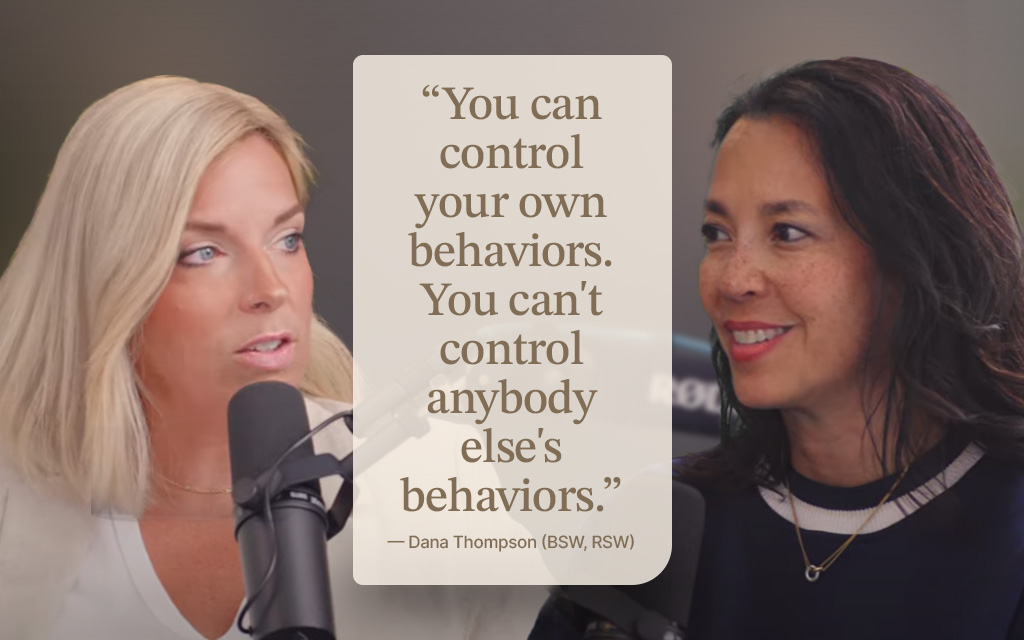
How Our Early Bonds Shape Parenting and Relationships: “You can control your own behaviors. You can’t control anybody else’s behaviors.” — Dana Thompson (BSW, RSW)
Healing as a Parent
Parenting often brings our old attachment wounds into focus. Children can trigger unresolved emotions. Not because of any wrong behavior, but because they reflect the parts of us that still need compassion.
“When we react to our child’s big emotions, it’s often not about their behavior — it’s about the wounds within ourselves.”
Parenting Takeaways from the Conversation
- Healing isn’t about perfection. It’s about acceptance. The goal isn’t to erase pain, but to hold it gently and choose a different path.
- Connection and boundaries go hand in hand. When children feel respected, they are more likely to trust and communicate effectively.
- Parenting is challenging, but awareness is healing. Recognizing old cycles is essential for breaking generational patterns.
Technology, Presence, and the Still Face
The conversation also addressed how social media can undermine connections. Dana compared modern phones to the “still face” experiment, where a caregiver’s emotional withdrawal caused immediate distress in a baby.
“I wonder if the phone has become that still face, where children are competing for their parents’ attention.”
The takeaway? Presence matters more than perfection. Our attention is one of the most powerful forms of love.
Closing Thoughts
Attachment influences everything: how we love, parent, and even how we communicate with ourselves. However, it can also be healed. Through connection, awareness, and compassion, both parents and children can build stronger and more secure relationships.
“Parenting isn’t about being perfect,” Lana concludes. “It’s about being conscious, connected, and committed to growth.”
Take the Next Step Toward Secure and Compassionate Relationships
If this conversation about attachment, parenting, and healing resonated with you, consider taking the next step toward deeper connection and self-understanding.
Whether you’re navigating the challenges of parenting, exploring your own attachment patterns, or working to break generational cycles, Lana is here to support you.
Book a call with Lana to begin your journey toward healing, awareness, and more compassionate relationships. Both with yourself and those you love.